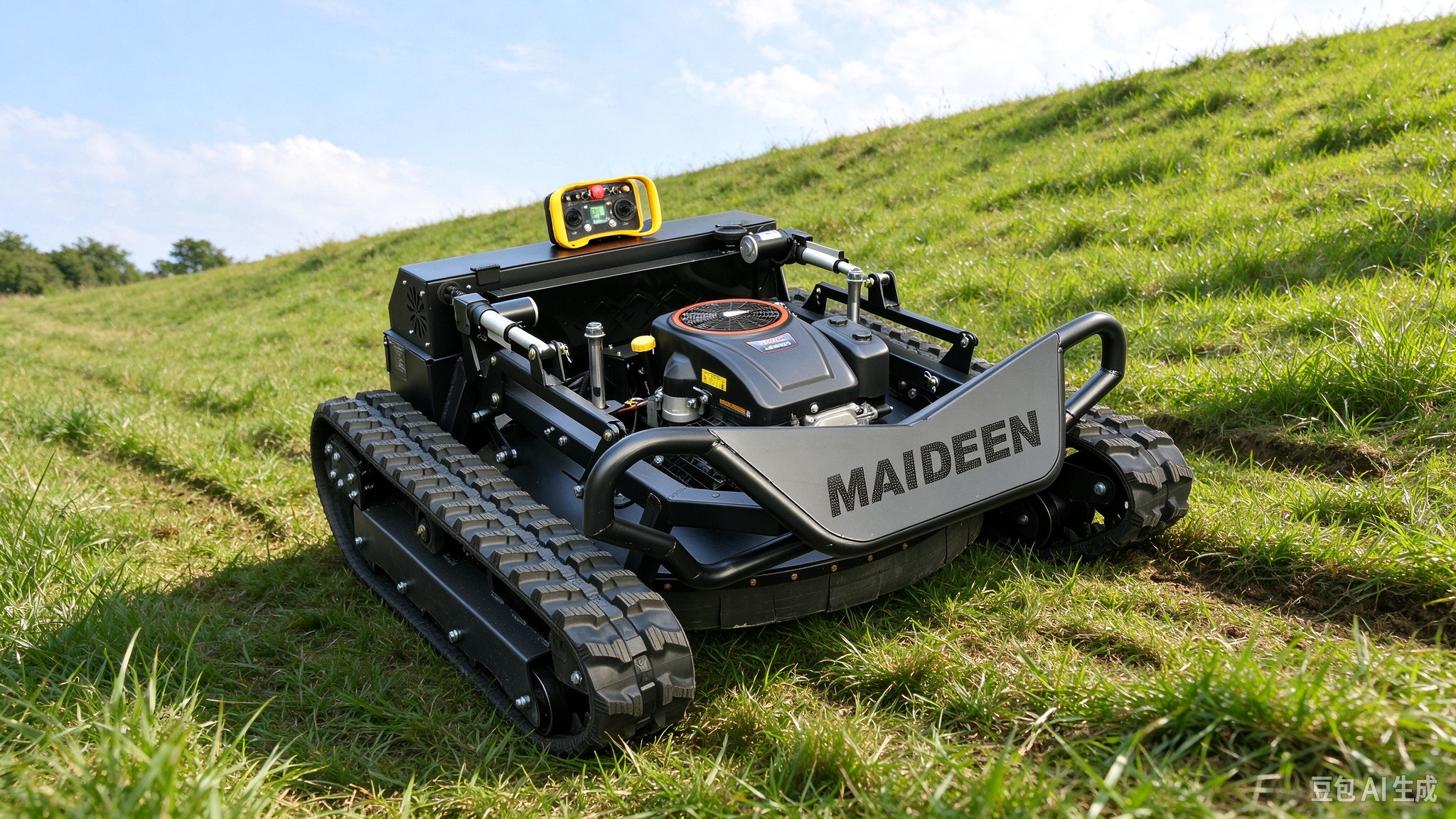
Remote tracked mowers are operated with visual observation. The operator’s view directly affects operation safety and cutting quality. In hilly areas, orchards, woodlands and embankments, trees, slopes and tall grass often block sight and create hidden hazards. Based on abundant field experience, Maideen shares practical line-of-sight management skills.
Before starting work, operators should pick an open, slightly elevated standing position to keep the machine in sight all the time. Avoid low spots or positions behind big trees where the mower can be hidden by vegetation. If the site has many natural obstacles, split the area into small sections instead of covering a large zone at once. Start work only when the view of each section is clear.
Slope work carries the highest blind-spot risk. When the mower moves to the far side of a slope, the hilltop can block the view. Operators cannot spot slipping or drifting in time. Never operate blindly from far away. It is better to mow along the slope in short sections or change observation points to watch tracks and cutting decks continuously. Avoid working against strong backlight, which distorts distance judgment.
Plan travel routes to prevent the mower from entering blind zones. Stop and detour when large bushes or dense woods block vision. Do not rely only on remote range and memory to keep working. Many operators mistakenly believe stable signal means safe operation, ignoring the danger of losing sight of the machine.
Maideen remote mowers are built with signal-loss auto-stop protection as a final safety measure, yet it cannot replace proper sight management. With clear vision, operators can spot blade impact, track deviation and grass tangling immediately and shut down the machine in time. Prioritizing line of sight prevents equipment damage and personal injury, keeping vegetation management steady and secure.